CXFabric
An AI workflow platform that makes complex automation easier to build, configure, and understand.
- Year:
- 2023–Present
- Role:
- Head of Design
- Type:
- AI Workflow Platform
- Status:
- Live
The Product
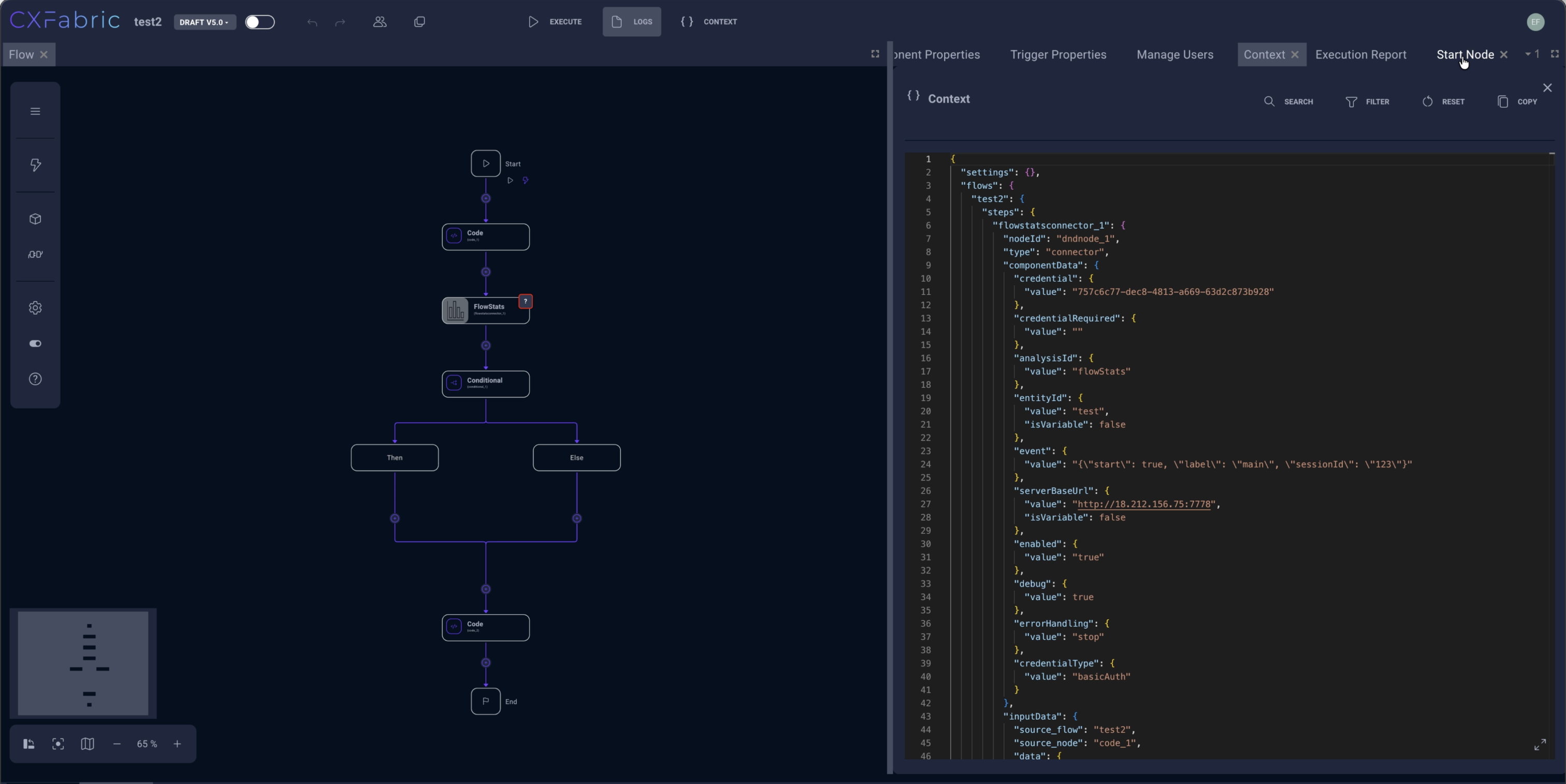
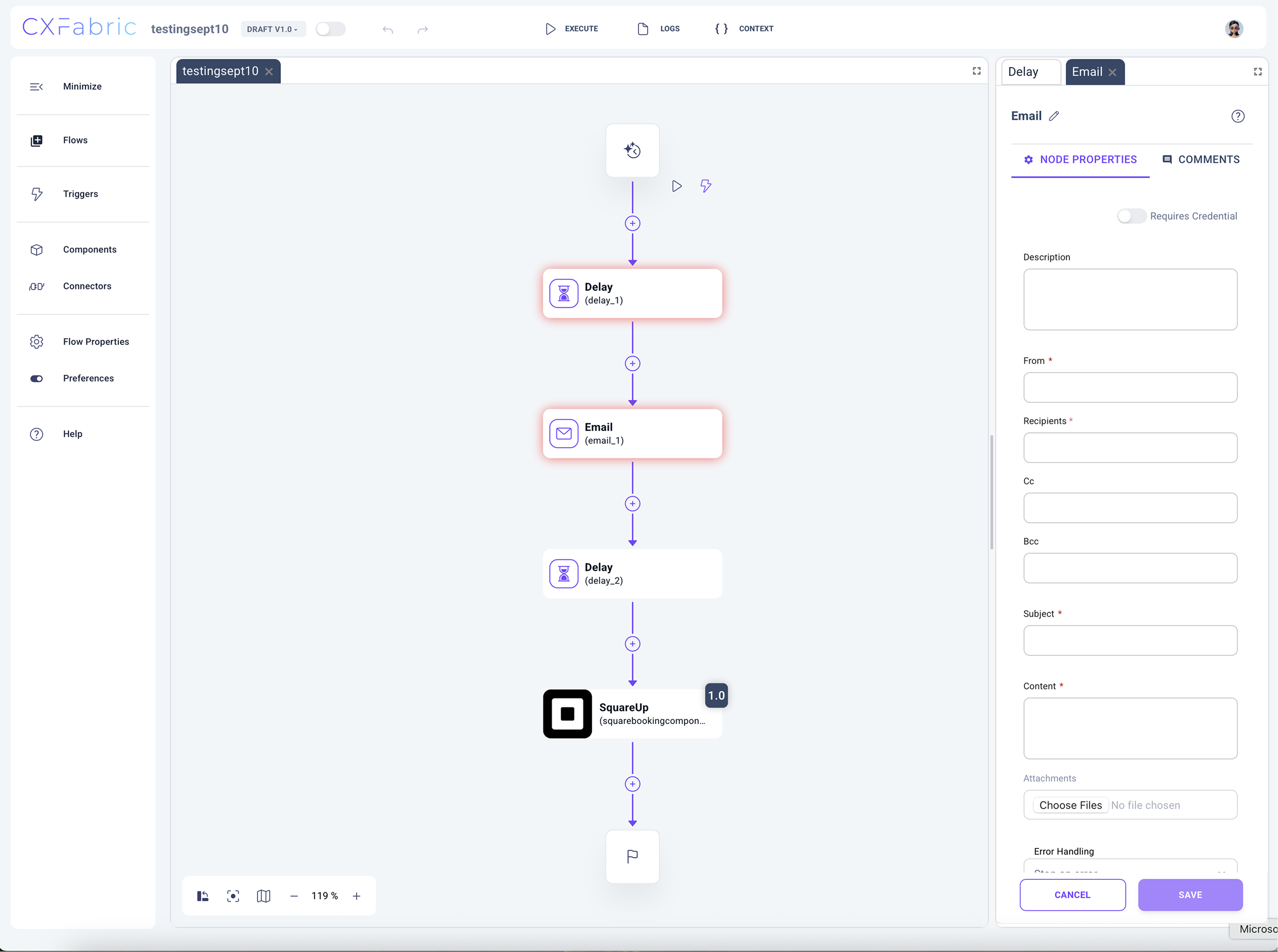
CXFabric brings a node-based workflow builder, administration tools, system resources, and configuration controls into one cohesive enterprise platform.
Visual orchestration makes triggers, branches, approvals, retries, and handoffs readable, while reusable connectors and custom code support the steps that need deeper logic. Deployment controls, credentials, logs, and execution history help teams test and operate workflows across cloud, VPC, and on-premises environments.
Visit CXFabricThe Challenge
The central challenge was making technically complex AI and integration workflows feel understandable without hiding the control enterprise teams need.
The product also evolved quickly as requirements, connectors, deployment models, and customer use cases changed. The interface needed to absorb that growth while keeping workflows readable, configuration predictable, and execution details visible.
The Process
As Head of Design, I shaped the product from early requirements and application mapping through workflow design, prototyping, design systems, iconography, engineering collaboration, QA, documentation, and brand identity.
I translated complex automation involving AI agents, communication systems, enterprise data, and human decisions into understandable interface patterns. Close partnership with engineering, QA, documentation, and leadership allowed the experience to evolve from early concepts into a live platform presented to customers and partners.
Branding
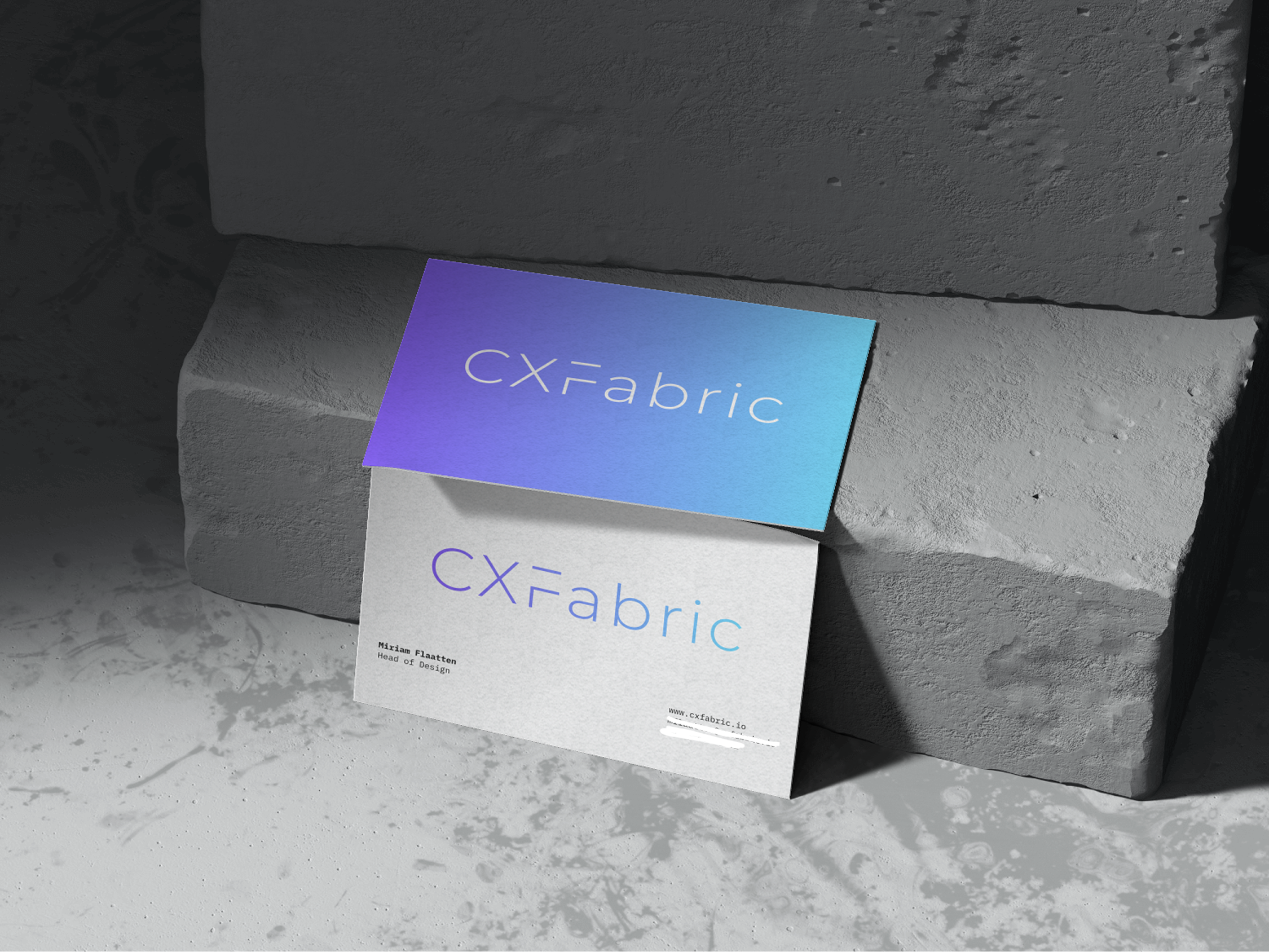
I created a visual identity that expressed CXFabric’s focus on artificial intelligence, connected systems, and automation, then extended it across the product, website, presentations, and customer-facing materials.
The identity pairs a restrained wordmark with a purple-to-blue spectrum that feels technical without becoming cold. The system was designed to remain recognizable across dense application interfaces, sales materials, business cards, and investor presentations.
Conclusion
The work brought workflow orchestration, administration, a reusable design system, custom iconography, and brand identity into one cohesive product ecosystem.
Designing the platform reinforced the value of building systems rather than isolated screens: shared patterns gave the team a stable foundation while leaving room for new connectors, workflows, and enterprise requirements.
